Smart contracts and Ethereum: how decentralized applications are changing the world

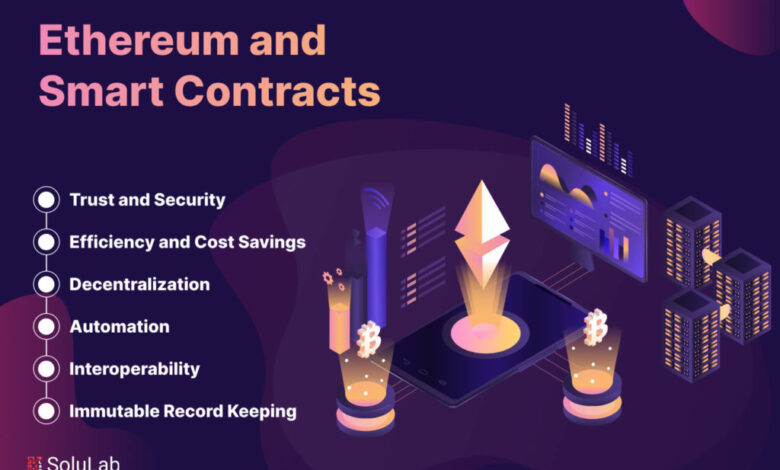
Smart contracts and Ethereum represent a groundbreaking shift in how digital transactions are executed. By enabling decentralized applications (dApps) to operate autonomously on the blockchain, they are reshaping various industries. This article explores their functions, advantages, and potential future impact.
What are smart contracts and how do they function?
Smart contracts are self-executing contracts with the terms of the agreement directly written into code. These contracts facilitate, verify, or enforce the negotiation or performance of a contract. They execute automatically when predetermined conditions are met, eliminating the need for intermediaries.
In essence, smart contracts are designed to increase efficiency and reduce the risk of fraud. They operate on blockchain technology, ensuring that all transactions are recorded on a public ledger, making them transparent and immutable.
Key features of smart contracts include:



- Automation: Processes are executed automatically, which reduces human error.
- Trust: The decentralized nature ensures that no single party has control, fostering trust among users.
- Cost Efficiency: By eliminating intermediaries, costs associated with transactions are significantly reduced.
Why is Ethereum the preferred platform for smart contracts?
Ethereum is widely recognized as the leading platform for smart contracts due to its robust and flexible infrastructure. Created by Vitalik Buterin in 2015, it allows developers to build decentralized applications seamlessly.
One of the primary reasons for Ethereum’s popularity is its open-source nature. This aspect encourages innovation and collaboration among developers, leading to a rich ecosystem of dApps. Additionally, Ethereum’s transition to a proof-of-stake mechanism further enhances its scalability and efficiency.
Moreover, Ethereum supports a wide range of programming languages, making it accessible to developers with various skill levels. This versatility fosters a diverse array of applications, from finance to supply chain management.
What are the key advantages of using smart contracts on Ethereum?
The advantages of using smart contracts on Ethereum are manifold. Firstly, they provide enhanced security through cryptographic techniques that protect against fraud and unauthorized access. This security is vital in sectors such as finance and healthcare, where data integrity is paramount.
Secondly, smart contracts enable faster transactions. Traditional systems often involve lengthy processes with multiple intermediaries, whereas Ethereum’s smart contracts execute in real-time. This speed can lead to significant savings in time and resources.
Other key advantages include:
- Flexibility: Smart contracts can be programmed for various use cases, allowing innovative solutions across different industries.
- Transparency: All transactions are recorded on the blockchain, providing a clear audit trail.
- Cost Savings: By reducing the need for intermediaries, businesses can lower their operational costs significantly.
How are smart contracts revolutionizing decentralized finance (DeFi)?
Smart contracts are at the heart of the decentralized finance (DeFi) movement, transforming traditional financial systems. DeFi platforms leverage smart contracts to facilitate peer-to-peer transactions without intermediaries, enhancing security and user trust.
These platforms allow users to lend, borrow, and trade cryptocurrencies in a decentralized manner. Through smart contracts, transactions are executed automatically once conditions are met, optimizing the overall user experience.
Examples of DeFi applications include:
- MakerDAO: A decentralized lending platform where users can borrow against collateral.
- Uniswap: A decentralized exchange that allows users to trade cryptocurrencies directly.
- Compound: A platform for lending and borrowing cryptocurrencies with algorithmic interest rates.
What are some real-world applications of smart contracts?
Smart contracts are finding applications in various sectors beyond finance. In supply chain management, they enhance transparency and traceability, allowing all parties to verify the status of goods in real time.
Another notable application is in the insurance industry. Smart contracts can automate claims processing, ensuring that claims are paid out instantly when conditions are met, thus reducing the administrative burden.
Other innovative use cases include:
- Real Estate: Smart contracts can streamline property transactions by automating escrow processes.
- Healthcare: They can manage patient records securely while ensuring compliance with regulations.
- Gaming: In-game assets can be tokenized and traded on the blockchain, providing players with true ownership.
What challenges do smart contracts and Ethereum face?
Despite their advantages, smart contracts and the Ethereum platform face several challenges. One of the most significant issues is scalability. As the number of users and transactions increases, the network can become congested, leading to slower processing times and higher fees.
Another challenge is security. While smart contracts provide enhanced security, vulnerabilities in the code can lead to exploits. Developers must ensure that their contracts are thoroughly tested and audited to mitigate risks.
Additionally, regulatory uncertainty poses a challenge for smart contracts and decentralized applications. As governments and organizations grapple with how to regulate blockchain technology, developers must navigate a complex landscape that may affect their projects.
How will smart contracts impact the future of digital transactions?
The future of digital transactions is set to be profoundly influenced by smart contracts. As they become more mainstream, we can expect to see increased adoption in various industries, reducing the reliance on traditional intermediaries.
Furthermore, the integration of smart contracts with emerging technologies like artificial intelligence (AI) and the Internet of Things (IoT) could lead to even more innovative applications. For instance, smart contracts could automate processes in smart homes, allowing devices to interact seamlessly.
In conclusion, the integration of smart contracts and Ethereum is paving the way for a new era of digital transactions, characterized by transparency, efficiency, and trust.
Questions related to smart contracts and Ethereum
What are decentralized applications, DApps, and smart contracts?
Decentralized applications (DApps) are software applications that run on a peer-to-peer network, instead of being hosted on centralized servers. They leverage blockchain technology to provide services without a central authority. Smart contracts function as the backbone of many DApps, automating processes and ensuring transactions execute only when specific conditions are met.
In essence, DApps and smart contracts work together to create a more secure and efficient online environment, enabling a wide range of functionalities across various sectors.
What is the benefit of Ethereum smart contracts?
The primary benefit of Ethereum smart contracts lies in their ability to facilitate trustless transactions. By eliminating the need for intermediaries, parties can engage directly with one another, significantly lowering costs and increasing efficiency.
Additionally, Ethereum’s robust infrastructure supports a diverse range of applications, fostering innovation and competition. This versatility allows developers to create solutions that cater to specific needs across industries, enhancing user experience.
What is the role of smart contracts in decentralized finance?
In decentralized finance (DeFi), smart contracts automate financial transactions, enabling peer-to-peer lending, borrowing, and trading without intermediaries. This automation not only speeds up transactions but also enhances security by minimizing the risks associated with human error.
Furthermore, smart contracts ensure transparency in DeFi operations, allowing users to verify transactions and conditions on the blockchain. This level of transparency builds trust within the community and encourages wider adoption of DeFi solutions.
What’s a real-world situation that you think smart contracts could help with?
A practical application of smart contracts could be in the realm of real estate transactions. Traditionally, buying or selling a property involves numerous steps and intermediaries, leading to delays and additional costs. By using smart contracts, these processes can be automated, ensuring that conditions for the transaction are met before ownership is transferred.
This approach not only streamlines the process but also enhances security and transparency, providing all parties with a clear record of the transaction that is immutable on the blockchain.